
Nebroo HearWell Review
Straining to follow everyday conversations can wear you down, yet many people hesitate to spend thousands on traditional hearing aids. Nebroo HearWell steps in as an over-the-counter option for adults who want straightforward amplification at a much lower price.
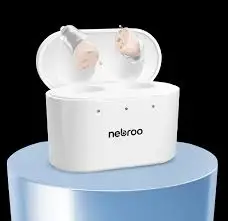
These are small, Completely-In-Canal (CIC) devices focused on ease of use: no smartphone app to learn, no Bluetooth pairing to manage, and no prescription fitting. The appeal is simple—charge them, place them in your ears, set the volume, and go.
Nebroo HearWell
★★★★☆ 4.2/5
- Type: OTC Hearing Aid
- Ideal For: First-time & budget-conscious users
- Style: CIC / In-canal
- Battery: Rechargeable
- Runtime: Up to 16 hours claimed
- Volume Levels: 6
- App: No
- Bluetooth: No
- Price Range: Under $200 per pair
What Makes Nebroo Different?
Nebroo doesn’t chase high-end features. Its value comes from keeping things simple and affordable. You get a compact in-canal design and a handful of practical functions aimed at making daily listening less of a struggle—without the learning curve of an app or the sticker shock of premium models.
The brand highlights:
- Compact CIC form factor
- Rechargeable batteries
- Charging/storage case
- Six preset volume options
- Basic noise-reduction processing
- Feedback-cancellation processing
- Up to 16 hours of stated battery life
- Structured 6-week adjustment program
It’s positioned as a budget OTC hearing pick where actual price can vary by model and promotion.
How Nebroo HearWell Works
Each earpiece uses a microphone to pick up surrounding sound, runs it through onboard processing, then amplifies it into the ear canal. A physical control lets you toggle through six preset amplification levels until you find one that feels comfortable.
This stripped-back approach is both the draw and the limitation. There’s no audiogram-driven personalization, no Bluetooth link, and no phone-based equalizer—just ready-to-use amplification with a short learning curve.
Is the Sound Quality Good?
Performance is context-dependent. Nebroo tends to be more helpful in calmer settings where there aren’t many competing sounds. In these situations, voices usually come through more clearly and listening is less taxing.
Where it’s most likely to help:
- One-on-one talks at home
- Watching TV at a comfortable volume
- Quiet conversations
- Relatively calm indoor environments
The compromises show up in tougher scenes: hopping restaurants, busy gatherings, outdoor wind, or multiple people speaking at once. That’s common among budget devices, but buyers should be prepared for it.
Our Verdict
Viewed for what it is—an uncomplicated, wallet-friendly OTC hearing aid—Nebroo HearWell offers sensible value. The rechargeable battery, discreet CIC design, six volume steps, and old-school button controls make it approachable for beginners.
Its low cost comes with trade-offs. There’s no app, no Bluetooth, no pro fitting, and no custom tuning based on a hearing test. Reports of feedback or whistling also appear, especially during insertion or in certain acoustic situations.
Those who need robust noise handling, streaming, or fine-tuned personalization should explore more advanced options. But for adults who suspect mild to moderate hearing loss and mainly want straightforward help in quieter spaces, Nebroo can be a reasonable place to start.
Editor’s Rating: 4.2/5
Pros
- Budget-friendly pricing
- Discreet CIC form factor
- Rechargeable—no disposable batteries to manage
- Portable charging case included
- Six easy volume presets
- Simple, tactile controls
- No app setup required
- Stated runtime up to 16 hours
- Good entry point for first-time users
- Built-in 6-week easing-in plan
Cons
- No Bluetooth connectivity
- No companion smartphone app
- Limited ability to personalize sound
- Feedback/whistling can occur
- Struggles more in noisy environments
- Fit and comfort can depend on ear-canal shape
- Lacks professional fitting
- Not right for every hearing-loss profile
The 6-Week Adjustment Program
Nebroo encourages a gradual ramp-up so new users aren’t overwhelmed by amplified sound on day one. The suggested plan moves from quiet practice to more complex listening over six weeks.
- Week 1: Short sessions in calm, quiet places.
- Week 2: Extend daily wear time; focus on one-on-one chats.
- Week 3: Add TV and phone conversations.
- Week 4: Try smaller groups.
- Week 5: Introduce moderately noisy environments.
- Week 6: Aim for a steadier, regular routine.
The idea is to let your brain adjust to amplified sound in manageable steps.
Nebroo HearWell Complaints
The most common concern is feedback or a whistling tone. It can crop up during insertion or removal and in some environments. This isn’t unusual with in-canal devices but is still worth noting.
Another limitation is personalization. With only six preset volumes, you’re not getting fine-tuned programming that matches an audiogram. Some people may find the presets helpful; others may need a device that can be tailored more precisely.
Nebroo vs. Premium Hearing Aids
Where Nebroo shines is price and simplicity. You skip the extras, and in return you pay far less and can start using them right out of the box.
Higher-end OTC and professionally fitted devices may include:
- More advanced background-noise reduction
- Bluetooth connectivity
- Smartphone apps and adjustments
- Personalized sound profiles
- Frequency-specific fine-tuning
- Audio streaming
- More sophisticated feedback control
- Professional fitting and aftercare
Nebroo deliberately leaves out many of these upgrades to keep costs down and controls simple.
Is Nebroo Suitable for Seniors?
Suitability depends less on age and more on hearing needs, ear health, dexterity, and whether a professional fitting is important. Some older adults will appreciate the charge-and-go design and basic button controls. Others may find the tiny CIC form tricky to handle or prefer a solution with professional guidance.
Who Should Consider Nebroo?
- Adults who suspect mild to moderate hearing loss
- First-time hearing-aid shoppers
- Anyone on a tighter budget
- People who want a discreet, in-canal look
- Those who prefer simple tech with minimal setup
- Listeners who spend more time in quieter places
- Shoppers who don’t need Bluetooth
- People who want rechargeable devices
Who Should Look Elsewhere?
- Severe or profound hearing loss
- Sudden or rapidly changing hearing loss
- Ear pain or drainage
- Big differences in hearing between ears
- Ongoing dizziness
- Active ear conditions
- Need for audiogram-based personalization
- Need for Bluetooth or app features
Children should not use adult OTC hearing aids in place of a proper professional evaluation.
Frequently Asked Questions
Are Nebroo HearWell hearing aids rechargeable?
Yes. They include a rechargeable system with a portable charging case.
What’s the battery life?
The stated maximum is up to about 16 hours per full charge.
Are Nebroo hearing aids invisible?
They’re CIC and intended to sit discreetly in the ear canal. Actual visibility varies with ear shape and fit.
Do they have Bluetooth?
No.
Can I connect Nebroo to an iPhone or Android phone?
Not for streaming or app-based controls. There’s no Bluetooth or companion app.
How is the volume adjusted?
A physical button cycles through six preset volume levels.
Are they good in noisy environments?
They tend to work better in quieter situations and can struggle more with complex background noise.
What is the biggest complaint?
Feedback or whistling is mentioned most often.
Does Nebroo replace professionally fitted hearing aids?
Not necessarily. Professionally fitted models can be tuned to your hearing test and may offer more advanced processing and follow-up care.
Is Nebroo for severe hearing loss?
No. It’s positioned for adults with mild to moderate hearing difficulty.
Nebroo HearWell
★★★★☆ 4.2/5 Editorial Rating
UNDER $200/PAIR
Current pricing may vary by model and promotion.
Simple hearing support without extra tech: a compact, rechargeable in-canal design with six volume settings and straightforward button controls.
RECHARGEABLE • 6 VOLUME LEVELS • UP TO 16-HOUR RUNTIME
Designed for adults with perceived mild to moderate hearing difficulty. Not suitable for every type of hearing loss.